About Alexander Zverev

Alexander Zverev stands as a defining figure of the post–Big Three era, where power, physical presence, and competitive resilience shape modern men’s tennis. With a controlled baseline game and major titles including ATP Finals and Olympic gold, Zverev has secured his place among the ATP elite. His career reflects a constant balance of expectation, adversity, and sustained contention at the highest level of the sport.

Quick fact

Attribute Detail
Full Name Alexander “Sascha” Zverev
Nationality Germany
Date of Birth April 20, 1997
Birthplace Hamburg, Germany
Height 1.98 m (6 ft 6 in)
Plays Right-handed (two-handed backhand)
Highest Ranking World No. 2
Olympic Achievement Gold Medal – Tokyo 2020 🥇
ATP Finals Titles Champion (2018, 2021)
Preferred Surfaces Hard Courts & Clay Courts

Early Life

Alexander Zverev’s journey in elite tennis was not a late-blooming story, but one built on a strong family tradition and a structured training pathway from a very young age. His childhood years, junior career, and transition into the professional ranks laid a crucial foundation for his long-term development on the ATP Tour

Early Childhood and First Steps into Tennis

Alexander Zverev was born into a family deeply rooted in tennis. Both of his parents were former professional tennis players, creating a highly structured sporting environment from his earliest years. Zverev was introduced to tennis at a very young age and received direct guidance from his father during foundational training sessions. This early exposure to proper technique, training discipline, and competitive mindset allowed him to quickly develop ball feel, coordination, and tactical awareness—qualities rarely seen at such a young age.

Beyond technical instruction, his early upbringing emphasized consistency and professionalism rather than short-term results. Training sessions were designed to build physical fundamentals, footwork patterns, and mental resilience, allowing skills to develop naturally with age. Instead of being rushed into competition, he progressed methodically, gaining confidence through repetition and structured match play. This patient, long-term approach ensured that when he began competing at higher levels, his game was already grounded in stability, balance, and a clear understanding of how to construct points rather than relying solely on raw talent.

Junior Career Breakthrough and Early Recognition

Alexander Zverev quickly emerged as one of the world’s leading junior players. His breakthrough came with the Australian Open Junior title, a victory that propelled him to the No. 1 position in the ITF Junior rankings. This success was driven not only by his physical advantages for his age, but also by a mature playing style, strong match control, and remarkable competitive composure. Tennis analysts widely regarded Zverev as one of Europe’s most promising young talents, with frequent comparisons to established stars of previous generations even at the junior level.

Beyond trophies and rankings, his junior career stood out for the way he handled pressure in high-stakes matches. He demonstrated an ability to adapt tactically, manage momentum swings, and close out matches with discipline rather than impulsiveness. These qualities signaled that his potential extended beyond junior success, suggesting a smooth transition to the professional circuit. By the time he completed his junior career, Zverev was already viewed not merely as a talented prospect, but as a future contender capable of competing at the highest levels of the sport.

Transition from Junior Champion to ATP Professional

Alexander Zverev moved swiftly into the professional ranks after establishing himself at the junior level, choosing to gain real match experience as early as possible. He began this phase through ITF Futures and ATP Challenger tournaments, where he adapted quickly to the physical intensity and mental demands of the senior game. Wins over seasoned opponents allowed him to accumulate valuable ranking points and build momentum toward entry into the ATP Tour. This smooth progression from junior to professional competition demonstrated that Zverev was not only a youth champion, but a player with the structural foundation required for long-term success at the highest level.

As his schedule expanded, the transition period became a crucial stage of refinement rather than reinvention. Facing older, physically stronger opponents forced him to improve shot selection, serve efficiency, and match management under sustained pressure. These early professional experiences accelerated his learning curve and reinforced the importance of patience and adaptability. By the time he began appearing regularly in ATP Tour main draws, Zverev already possessed the composure and tactical awareness of a player prepared to compete consistently against the world’s elite.

Origins

Alexander Zverev’s career cannot be separated from a family foundation deeply embedded in tennis DNA. From his formative environment and the influence of those closest to him to the gradual expansion into a fully professional coaching structure, each element has played a role in shaping his playing style, competitive mindset, and long-term development path on the ATP Tour.

A Tennis-Driven Family Background

Alexander Zverev grew up in a household where tennis was not merely a passion, but an integral part of family identity. His father, Alexander Zverev Sr., and his mother were both former professional tennis players who competed at a high level before settling in Germany. This background provided Zverev with a highly structured sporting environment, where discipline, training methodology, and professional knowledge were prioritized from an early age.

Growing up in a family with first-hand experience of elite competition allowed Zverev to absorb the standards of professional tennis early on—from fundamental technique and daily routines to coping with competitive pressure. This upbringing clearly set him apart from many young players who first encounter tennis within conventional academy systems, giving him a more comprehensive and realistic understanding of the sport.

The Influence of Father and Brother on His Development

Zverev’s father played the most important foundational coaching role during the early stages of his career, overseeing the development of technique, tactical thinking, and training discipline. Under his direct guidance, Zverev was educated through a holistic approach that emphasized consistency, adaptability, and long-term growth rather than short-term results.

At the same time, his older brother, Mischa Zverev—a professional player with regular appearances on the ATP Tour—served as a practical bridge between structured training and elite-level competition. Mischa offered valuable insights into match realities, psychological pressure, demanding travel schedules, and off-court challenges. The combination of his father’s coaching expertise and his brother’s tour-level experience created a rare developmental ecosystem within modern tennis.

Coaching Evolution and Professional Mentorship

As his career advanced into the upper tiers of professional tennis, Zverev gradually expanded his coaching team beyond the family circle. He worked with a range of experienced coaches and specialists to refine tactical execution, physical conditioning, and mental performance. This shift reflected a move from a family-centered model to a fully professional coaching structure aligned with the demanding standards of the ATP Tour.

The ongoing adjustments to his coaching setup illustrate a continuous search for balance between his established playing identity and the need to optimize performance at the highest level. Periods of collaboration with seasoned mentors contributed to improvements in match management, surface adaptability, and consistency across long seasons. These factors have been central to Zverev’s ability to remain among the ATP elite through years of intense competition.


Career

Alexander Zverev’s professional career mirrors the arc of a highly touted talent who broke through early, surged into the spotlight, and faced major trials to hold his place among the ATP elite. From his explosive emergence on tour and peak competitive years to a career-threatening injury setback, Zverev’s journey has been a constant test of expectation, pressure, and adaptation at the highest level of the sport.

Early Breakthrough: From Rising Prospect to First-Team Starter of the ATP Elite

Alexander Zverev announced himself on the ATP Tour by winning his first ATP title at a remarkably young age, quickly confirming that his talent translated to the senior level. Victories over established stars, combined with a growing collection of ATP 500 and Masters 1000 titles, propelled him rapidly into the world’s top 10. This breakout phase showed that Zverev was not only physically and technically suited to modern tennis, but also capable of adjusting swiftly to the relentless pace and intensity of the ATP Tour. Maintaining a high ranking across multiple seasons cemented his status as a consistent member of the elite rather than a short-lived sensation.

Prime Years Under the Spotlight: Trophy Runs and Grand Slam Deep Drives

Zverev’s peak performance years were defined by landmark titles and clear progress on the Grand Slam stage. He captured the ATP Finals twice, defeating the season’s strongest players in the most pressure-filled environment on the calendar. His Olympic gold medal at Tokyo marked another defining moment, highlighting his ability to deliver at the highest level in knockout-format competition under unique global scrutiny.

At the Grand Slams, Zverev pushed deeper into the latter rounds, most notably reaching the US Open final, where he demonstrated five-set resilience and the capacity to compete head-to-head with the very best. This period reframed him as a genuine title contender, no longer judged on promise alone but on tangible results against elite opposition.

Injury Time-Out and the Comeback Fight: Rebuilding After the Toughest Tackle

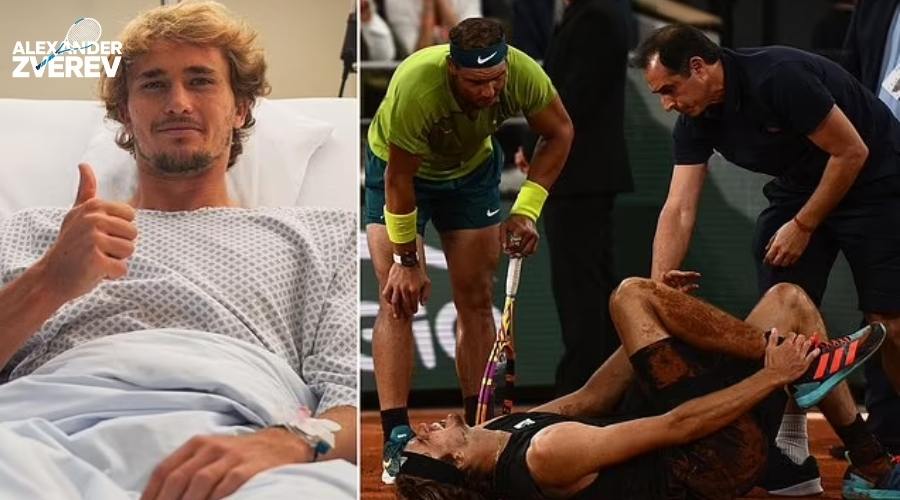
The most serious turning point in Zverev’s career came at Roland Garros 2022, when a severe injury during a high-stakes match forced him off court and into a lengthy rehabilitation process. The setback not only sidelined him for months, but also halted his momentum at the height of his competitive prime.

His recovery phase demanded patience and discipline as he returned gradually, accepting fluctuations in form while rebuilding physical strength and match sharpness. Step by step, Zverev restored his ability to compete at major tournaments, reaffirming the mentality of an athlete shaped by elite pressure. This comeback journey reshaped his image—from a player defined by expectation to one recognized for resilience, adaptability, and the capacity to overcome adversity while remaining a key figure in the modern ATP hierarchy.

Achievements

Alexander Zverev has firmly established himself as a top-tier global star through a massive collection of titles, highlighted by the Tokyo 2020 Olympic Gold Medal and two ATP Finals championships.

Overview of Alexander Zverev’s Title Collection

To provide a comprehensive view of Zverev’s career, the statistics table below categorizes the most prestigious titles he has achieved to date.

Title Category Quantity / Details
Olympics 01 Gold Medal (Tokyo 2020)
ATP Finals 02 Championships (2018, 2021)
ATP Masters 1000 06 Titles (Rome, Montreal, Madrid, Cincinnati, Paris)
Grand Slam Runner-up US Open 2020, Roland Garros 2024
Highest Ranking World No. 2

Detailed Standout Achievements by Season

The journey from a promising “Next Gen” talent to a top championship contender at Grand Slams is marked by specific milestones over time. Below are the most significant highlights of his career arranged in chronological order.

  • The 2016 season marked his initial breakthrough as Zverev claimed his first career ATP title at the St. Petersburg Open by defeating Stan Wawrinka in the final and finishing the year in the Top 25.

  • The 2017 season was a major turning point reaching Masters level where he won two prestigious Masters 1000 titles, the Italian Open (beating Novak Djokovic) and the Rogers Cup (beating Roger Federer), officially entering the World Top 10.

  • The 2018 season affirmed his star status when Zverev excellently won the ATP Finals for the first time in London while adding the Madrid Masters 1000 title to his collection.

  • The 2020 season witnessed maturity at Grand Slams as he reached his first major final at the US Open, only falling to Dominic Thiem in a dramatic fifth-set tie-break.

  • The 2021 season is considered his most successful year as Zverev won the Tokyo 2020 Olympic Gold Medal for Germany, claimed his second ATP Finals title, and captured two additional Masters 1000 trophies in Madrid and Cincinnati.

  • The 2022 season and his return from injury were noted with a World No. 2 ranking, although he suffered a serious injury during the Roland Garros semifinals while playing a competitive match against Rafael Nadal.

  • The 2024 season marked a strong resurgence as Zverev returned to his second Grand Slam final at Roland Garros and won the Rome Masters, asserting his position as a new-generation clay court force.

Journey

Alexander Zverev’s enduring success on the ATP Tour is not merely a result of natural talent or superior technique; it is built upon a solid foundation of personal discipline, the ability to navigate immense pressure, and a powerful spirit of recovery. These “behind-the-scenes” factors play a decisive role in maintaining his position at the pinnacle of professional tennis.

Structured Training Habits and Professional Discipline

Zverev distinguishes himself through a highly structured and long-term approach to athletic development. Rather than chasing momentary spikes in form, he maintains a consistent training regimen that carefully balances technical refinement, physical conditioning, and recovery.

Structured Training Habits and Professional Discipline

In the grueling context of the ATP Tour calendar, Zverev places special emphasis on workload management, ensuring his body is peaked and ready for critical phases of the season. His disciplined lifestyle—encompassing rigorous sleep schedules, precise nutrition, and active recovery protocols—helps minimize injury risks and sustains high performance over the years. This methodology reflects the mindset of an athlete prioritizing career longevity and sustainability over short-term gains.

Pressure Management and Learning from Defeat

Competing at the elite level means constantly facing high expectations, media scrutiny, and expert analysis. Zverev is recognized for his ability to absorb this pressure, operating with stability rather than relying on fleeting emotional highs.

More importantly, he approaches defeat with a pragmatic and analytical mindset. Instead of reacting emotionally to major losses, Zverev focuses on reviewing tactical execution, adjusting his match rhythm, and improving specific technical limitations. This capacity to learn from setbacks allows him to remain competitive at the highest level, even during periods when his form is not ideal.

Overcoming Major Injury and Rebuilding Competitive Confidence

A defining turning point in Zverev’s career was the severe injury that forced him away from the court for an extended period. Instead of rushing a premature return, Zverev chose a path of comprehensive rehabilitation, focusing on rebuilding his physical base, movement mechanics, and match feel from the ground up.

Overcoming Major Injury and Rebuilding Competitive Confidence

The journey back was as much a psychological test as a physical one. His willingness to temper short-term expectations and take a step-by-step approach to regaining confidence demonstrated the true mettle of a champion willing to rebuild. It was this resilience that allowed Zverev to reassert his status and successfully reintegrate himself into the elite group of modern men’s tennis.

Personal

Beyond his thunderous serves and major victories on the court, Alexander Zverev leads a colorful personal life. He is the archetypal example of an athlete born into the sport, deeply influenced by his family while enjoying the modern, high-profile lifestyle of a tennis superstar.

A Tennis Dynasty and Strong Family Bonds

Alexander Zverev was born into a true tennis family, establishing a foundation for success before he even picked up a racket. With both his father, Alexander Zverev Sr., and mother, Irina Zvereva, being former professional players from the Soviet Union, he inherited a wealth of genetic talent and received rigorous technical guidance from a very young age. This close-knit family dynamic extends to his older brother, Mischa Zverev. Far more than just a sibling, Mischa is a former Top 25 player who serves as a trusted tactician and constant companion, traveling the world with Sascha to provide emotional support and professional advice during the grueling tour schedule.

Relationships and the Responsibility of Fatherhood

Off the court, Zverev’s life has been marked by significant personal growth, particularly regarding his role as a father. The birth of his daughter Mayla in 2021, shared with his former partner Brenda Patea, became a pivotal moment that shifted his perspective and added a new layer of responsibility to his life. Zverev has frequently cited his daughter as a major source of motivation to excel in his career. Currently, he finds stability in his relationship with Sophia Thomalla, a prominent German model, actress, and television presenter. Her frequent presence in the player’s box and passionate support during matches have become a source of strength, helping him maintain mental equilibrium during high-pressure tournaments.

Lifestyle, Interests, and Life in Monte Carlo

When he steps away from the intensity of competition, Zverev embraces a lifestyle that balances luxury with simple personal pleasures. Like many of the sport’s elite, he has chosen Monte Carlo, Monaco, as his primary residence, utilizing the principality’s ideal climate for year-round training while enjoying the necessary privacy of a high-profile athlete. In his downtime, Zverev is an avid basketball fan, often expressing his support for the Miami Heat in the NBA. Furthermore, his fans are well-acquainted with Lövik, his beloved pet dog. Lövik is widely considered the team’s unofficial mascot, often accompanying Zverev on his travels and even appearing at practice sessions, providing a comforting sense of normalcy amidst the chaotic global travel of the ATP Tour.

Financial

Alexander Zverev is not only a top-tier star on the tennis court but also a formidable “money-making machine” in the world of sports. Based on his consistent performance and significant commercial appeal, below is an analysis and prediction of the German tennis player’s wealth as of the current period:

1. Dominating the ATP Prize Money Leaderboard

Alexander Zverev has consistently positioned himself among the highest-earning players in ATP history (outside the “Big 3”).

  • Tournament Earnings: By 2025, thanks to consistent deep runs at Grand Slams, Masters 1000 tournaments, and two ATP Finals championships, Zverev’s career prize money is estimated to have surpassed the $46 – $50 million USD mark.

  • Status: This figure solidifies his place in the Top 10 all-time highest earners in tennis history.

2. The “Goldmine” of Endorsement Deals

Zverev’s actual income is significantly boosted by lucrative sponsorship contracts. He is often the face of German luxury, power, and discipline.

  • Adidas: A long-term apparel and footwear contract worth millions annually.

  • Head: His equipment partner, specifically for the Head Gravity racket line.

  • Luxury Brands: Zverev frequently partners with high-end brands such as Rolex and Richard Mille (watches), or fashion labels like Zegna.

3. Estimated Net Worth

While exact figures regarding taxes and operational costs (coaching staff, travel, medical teams) are private, sports finance experts provide the following estimates:

  • Estimated Net Worth: Fluctuation between $35 million – $45 million USD.

  • Investment & Lifestyle: Zverev currently resides in Monte Carlo (Monaco)—a well-known tax haven for athletes. He also possesses a portfolio of real estate and luxury cars, helping to preserve and grow his accumulated wealth.

Alexander Zverev has transcended the label of a “Next Gen” prospect to become an undeniable pillar of modern tennis. His career is a compelling blend of dazzling highs—highlighted by Olympic Gold and dominance at the ATP Finals—and the gritty determination required to overcome career-threatening injuries. Zverev has proven that he possesses not just the elite physical tools, but also the iron mental fortitude necessary to survive and thrive at the highest level of the sport.

Looking ahead, the narrative of Zverev’s career now revolves around one final, elusive goal: a Grand Slam title. With his health fully restored and his game more mature than ever, the question is no longer if he has the ability, but when he will seize the moment on the biggest stage. For tennis enthusiasts, watching Zverev’s continued pursuit of greatness promises to be one of the most intriguing storylines on the ATP Tour in the years to come.

Gallery