
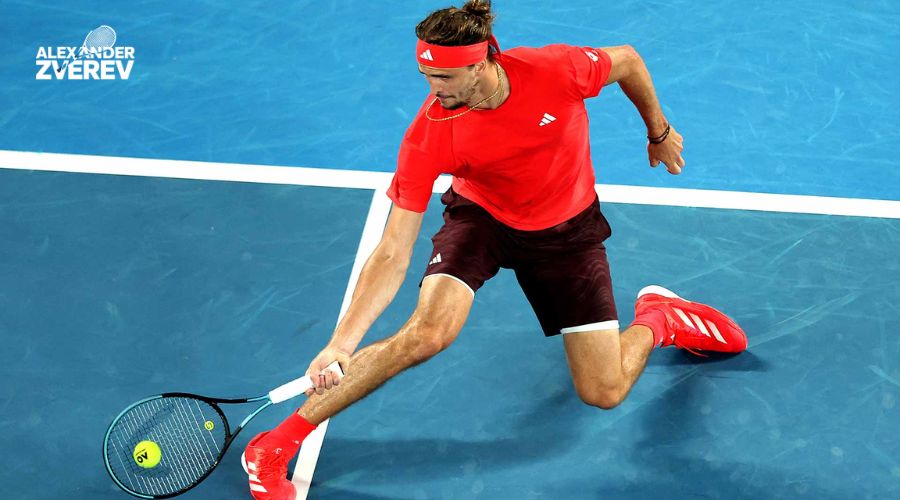
As the first Grand Slam of the calendar year, the Australian Open sets the tone for the entire tennis season, and for Alexander Zverev, Melbourne Park has historically been a proving ground of immense significance. The narrative of Australian Open Zverev is one of high expectations, physical battles, and agonizing near-misses. The blue hard courts of Melbourne suit his aggressive baseline game perfectly, often serving as a barometer for his form going into the rest of the year. While he has tasted deep runs and defeated the world’s best here, the Norman Brookes Challenge Cup remains elusive, making his journey Down Under one of the most compelling storylines in modern tennis.
Alexander Zverev’s Overall Record at the Australian Open
Zverev’s history at the “Happy Slam” reflects his evolution from a precocious talent to an established elite contender.
Appearances, Win–Loss Record and Best Results
Since making his main draw debut, Zverev has been a consistent figure in Melbourne. His win-loss record at the Australian Open is among the best of his generation on hard courts. While he has reached the final at the US Open and Roland Garros, his best result in Australia remains the semi-finals (notably in 2020 and 2024). Statistically, his winning percentage here is high, rivaling his success in New York, which underscores his comfort on hard surfaces. However, the lack of a final appearance distinguishes his Melbourne record from his other major achievements.
Consistency Across Early Rounds
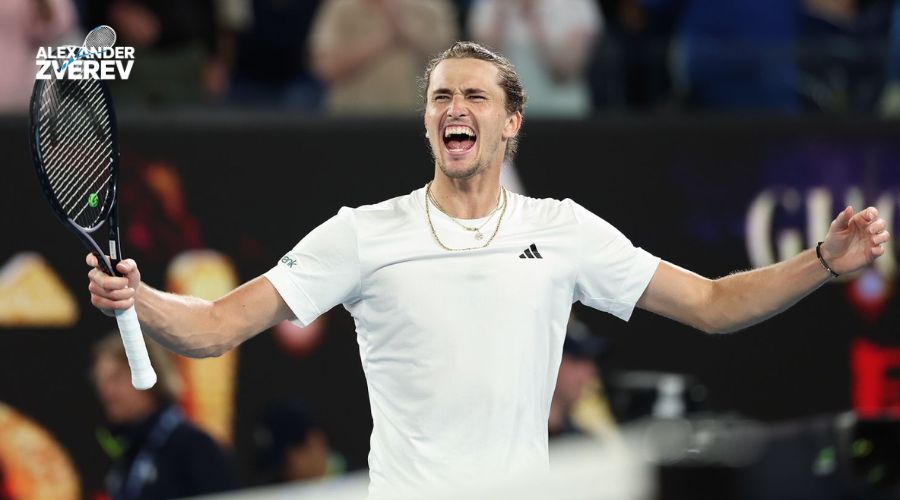
One of Zverev’s greatest strengths at the Australian Open is his ability to navigate the treacherous first week. Unlike many top seeds who fall victim to early upsets, Zverev reliably progresses to the second week. He has become a fixture in the Round of 16 and Quarter-finals, demonstrating a level of consistency that few peers can match. This reliability proves that when the Australian Open Zverev campaign begins, he is almost guaranteed to be in the mix for the business end of the tournament.
Key Australian Open Campaigns of Alexander Zverev
Several specific tournaments stand out in Zverev’s career, marking moments of brilliance and heartbreak.
Breakthrough Performances and Deep Runs
The 2020 Australian Open was a watershed moment for Zverev; it was here that he reached his first-ever Grand Slam semi-final, proving he could translate his Masters 1000 success to the major stage. More recently, his run in 2024 was spectacular, highlighted by a dominant quarter-final victory over Carlos Alcaraz. In that match, Zverev played perhaps the best tennis of his life, showcasing a level of serving and baseline aggression that cemented his status as a legitimate title heavyweight.
Disappointments and Missed Opportunities
However, the Australian Open Zverev story is also defined by “what could have been.” The 2024 semi-final against Daniil Medvedev serves as a painful example. Leading by two sets to love and appearing destined for the final, Zverev eventually succumbed in five sets. These losses highlight a recurring theme: while he can beat anyone on his day, closing out matches against fellow elite tacticians in the final stages of a Slam remains a hurdle.
Playing Style on Melbourne Hard Courts
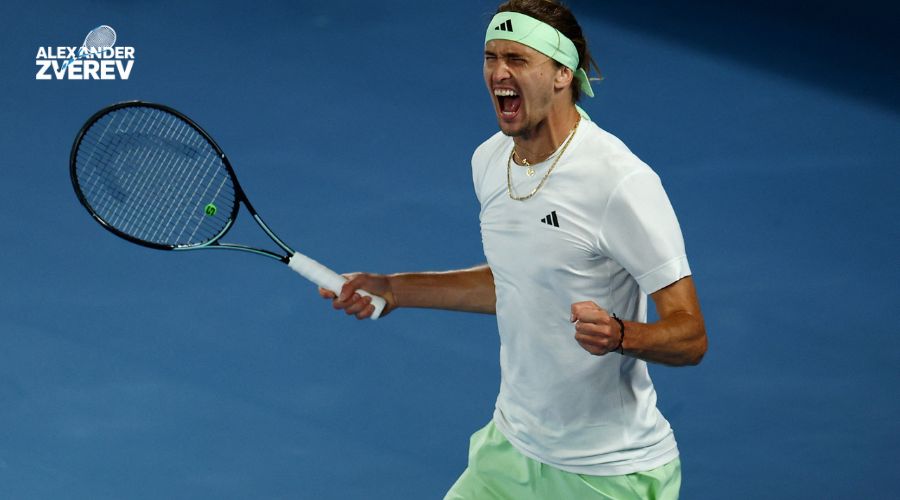
The conditions in Melbourne—often fast and bouncing true—complement Zverev’s natural physical attributes.
Serve, Baseline Power and Court Coverage
Zverev’s serve is his biggest weapon on the Australian hard courts. The surface rewards his high release point and power, allowing him to rack up aces and unreturned serves. Furthermore, his two-handed backhand is lethal here, allowing him to absorb pace and redirect it down the line. Despite his 1.98m frame, his court coverage is exceptional; he moves laterally with the agility of a much smaller man, making him incredibly difficult to hit through during long baseline rallies.
Tactical Challenges at the Australian Open
However, Melbourne poses unique challenges. The extreme heat can alter ball speed and bounce height, forcing Zverev to adjust his timing. Tactically, he sometimes struggles against ultra-aggressive returners who rush his forehand. In five-set matches, the challenge is often maintaining aggression; Zverev has a tendency to retreat too far behind the baseline when leading, allowing opponents to dictate play and claw their way back into the match.
Notable Matches and Rivalries at the Australian Open
Melbourne Park has hosted some of the most dramatic matches of Zverev’s career.
Memorable Australian Open Matches
Fans will long remember the 2020 semi-final against Dominic Thiem, a grueling four-set battle where Zverev played exceptional tennis but fell just short in key tie-breaks. Even more memorable was the 2024 clash with Medvedev—a match that encapsulated the entire Australian Open Zverev experience: dominance followed by a heartbreaking reversal of fortune. These matches have shaped his public image as a fighter who is constantly on the verge of the ultimate breakthrough.
Key Opponents Faced in Melbourne
Zverev has faced the “Big Three” and the “New Gen” in Australia. His battles against Novak Djokovic have shown he can compete physically, though Djokovic’s mental edge usually prevails on Rod Laver Arena. His victories over Carlos Alcaraz prove he can handle the explosive power of the younger generation. These rivalries define his path; to win the title, he almost invariably has to go through the absolute best in the world.
Why Zverev Has Yet to Win the Australian Open
Despite the talent and the deep runs, the trophy cabinet lacks the Norman Brookes Challenge Cup. Why?
Physical Demands and Five-Set Endurance
A major criticism of Zverev’s Grand Slam approach is his efficiency—or lack thereof. He frequently plays long, five-set matches in the early rounds against lower-ranked opponents. This “Marathon Man” tendency drains his energy reserves. By the time he reaches the semi-finals against a Medvedev or Djokovic, he often lacks the physical freshness required to execute his game plan for another four or five hours.
Mental Pressure and Grand Slam Expectations
The mental aspect is equally critical. The pressure to win his maiden Slam weighs heavily. In decisive moments, Zverev’s second serve has historically become shaky (though improved recently), and his shot selection can become conservative. Overcoming the fear of losing when holding a lead is the final puzzle piece he needs to solve.
Future Outlook – Can Zverev Win the Australian Open?
As Zverev enters his prime years, the window for an Australian Open title remains wide open.
What Needs to Improve for a Title Run
For the Australian Open Zverev dream to become reality, efficiency is key. He must ruthlessly finish early-round matches in straight sets to conserve energy. Tactically, he needs to maintain the aggressive court positioning he displayed against Alcaraz in 2024 throughout the entire two weeks, refusing to fall back into passive defense during tight moments.
Australian Open in Zverev’s Grand Slam Journey
The Australian Open represents Zverev’s best chance on hard courts. With the “Big Three” era fading and the field leveling out, Zverev possesses the experience and the game to triumph. If he can align his physical endurance with mental fortitude, there is no reason why he cannot stand atop the podium in Melbourne, transforming his legacy from a perennial contender to a Grand Slam champion.
